




This post may contain affiliate links. Please read our disclosure policy.
Soft, fluffy, and lightly sweet, these English Scones are a world apart from the dense, wedge-shaped kind you find at the coffee shop. Ready in under 30 minutes with ingredients you likely already have on hand, these are the real thing, and easier to make than you’d expect!
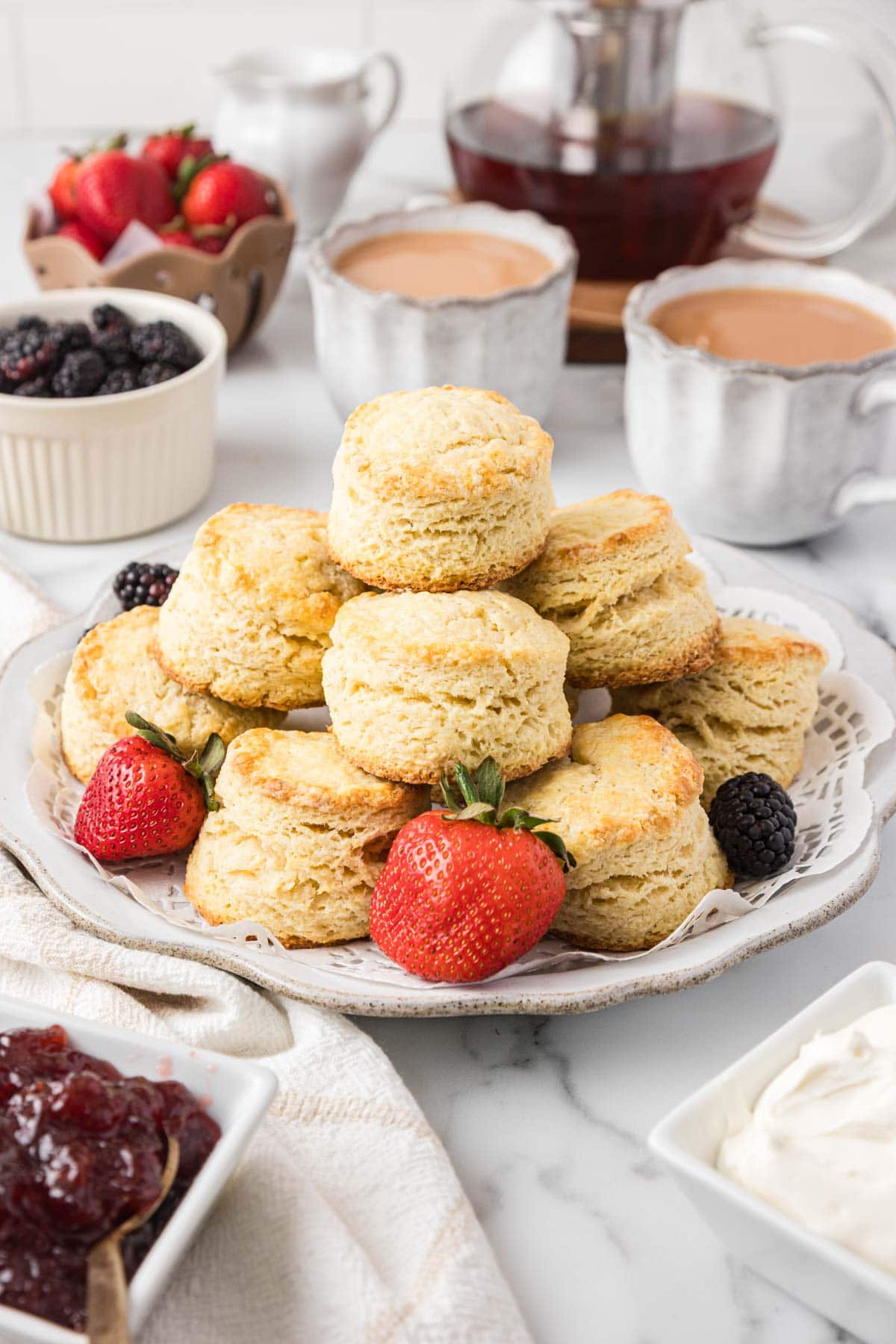
I have a soft spot for recipes that look impressive but come together with almost no fuss, and these English scones are exactly that! The trick that changed everything for me was the frozen butter method.
Grating a frozen stick straight into the dry ingredients instead of cutting it in with a pastry cutter. Those tiny shreds stay cold and create the most beautiful little pockets of steam in the oven that help the scones rise perfectly. Once you try it, you won’t go back!
Now, I am a Southern girl through and through, and biscuits are practically part of my DNA. My Butter Swim Biscuits are a staples in this house. So when I say these English scones are a whole different animal, I mean that with the deepest respect for both.
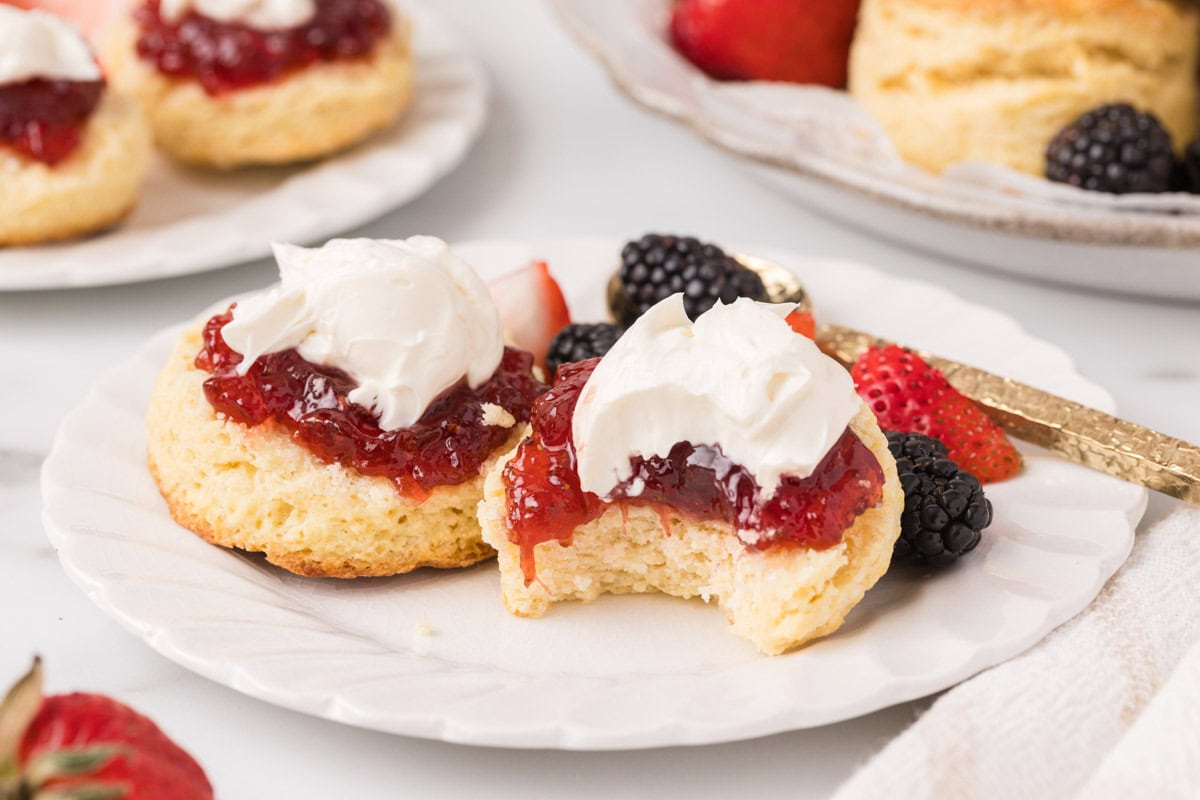
Where a Southern biscuits is savory, fluffy, and meant for a plate of gravy or a pat of butter, an English scone is lightly sweet, pillowy, and built for clotted cream and jam. Think of it as the British cousin who comes for afternoon tea instead of Sunday breakfast. I always make a batch of my Small Batch Strawberry Jam to go on the side!
Why Everyone Loves These English Scones

My Signature Fall Dinner Dishes!
FREE EMAIL BONUS: My greatest hits: bold, cozy, and brag-worthy.n
- Frozen butter = foolproof fluffiness. No pastry cutter, no complicated technique. Grating frozen butter is a beginner-friendly method that delivers professional results every single time.
- Ready in under 30 minutes. Fifteen minutes of prep, twelve to fifteen minutes in the oven, and you’re done. These are genuinely fast for a baked good that feels this special!
- Tested and perfected. I’ve made this English scones recipe over and over to get the ratio of buttermilk, milk, and egg just right. The result is a scone that’s soft inside, golden on top, and holds together beautifully when split!
- Incredibly versatile. Serve them plain with clotted cream and jam for a traditional cream tea, or stir in a handful of raisins for a classic variation. They work for brunch, afternoon tea, or anytime you want something a little elevated without a lot of effort.
Ingredients
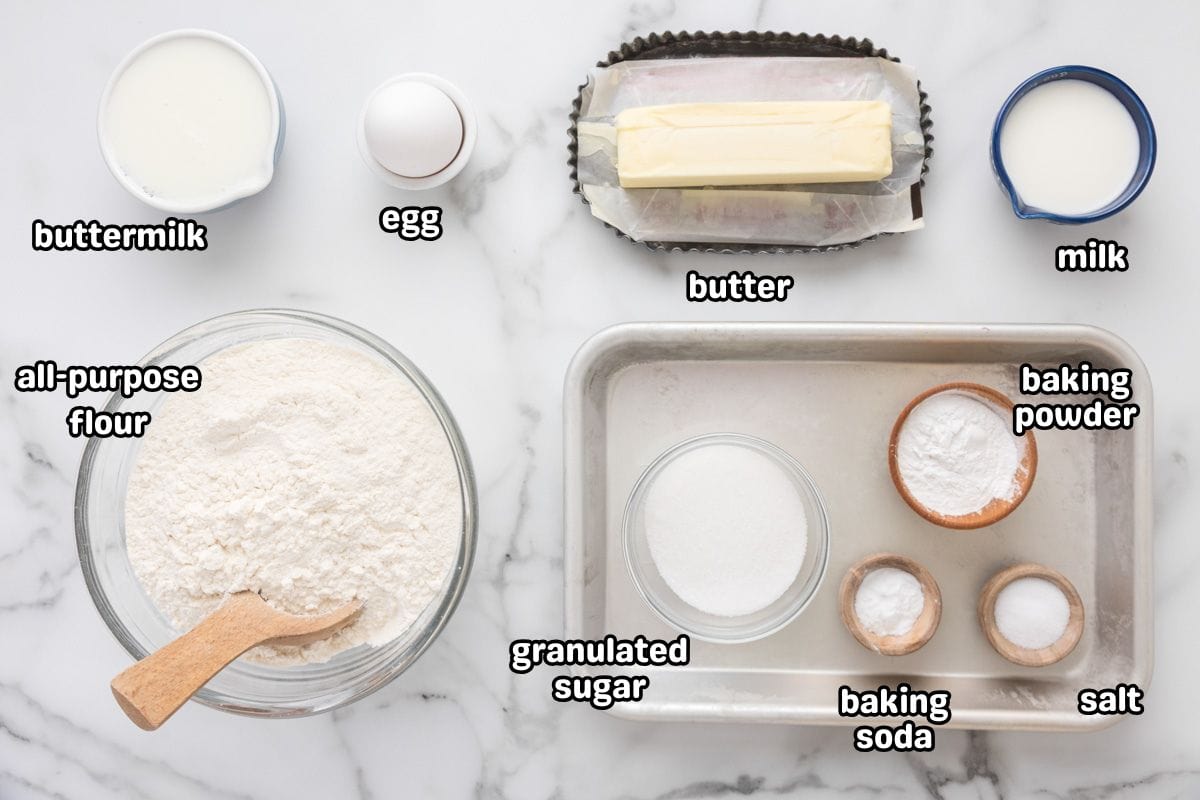
- All-purpose flour: Measure it correctly by spooning it into your measuring cup and leveling off the top!
- Unsalted butter: Freezing the butter and grating it directly into the flour creates tiny pockets that turn to steam in the oven, giving you those tall, fluffy layers.
- Buttermilk: Buttermilk adds a subtle tang and reacts with the baking soda to help the scones rise.
- Milk: A small amount of whole milk adds a bit of extra moisture.
- Large egg: The egg adds richness and helps bind the dough together. One tablespoon is also reserved as an egg wash!
- Baking powder: The main leavener that gives the scones lift in the oven. Make sure yours is fresh!
- Baking soda: Reacts with the acidity in the buttermilk for extra lift.
- Salt: To balance all the flavors!
- Granulated sugar: Just a quarter cup keeps these scones lightly sweet the way a traditional English scone should be.
How To Make English Scones
✱ Below shows step-by-step photos and instructions. For the complete recipe, along with ingredient amounts, scroll down to the recipe card.
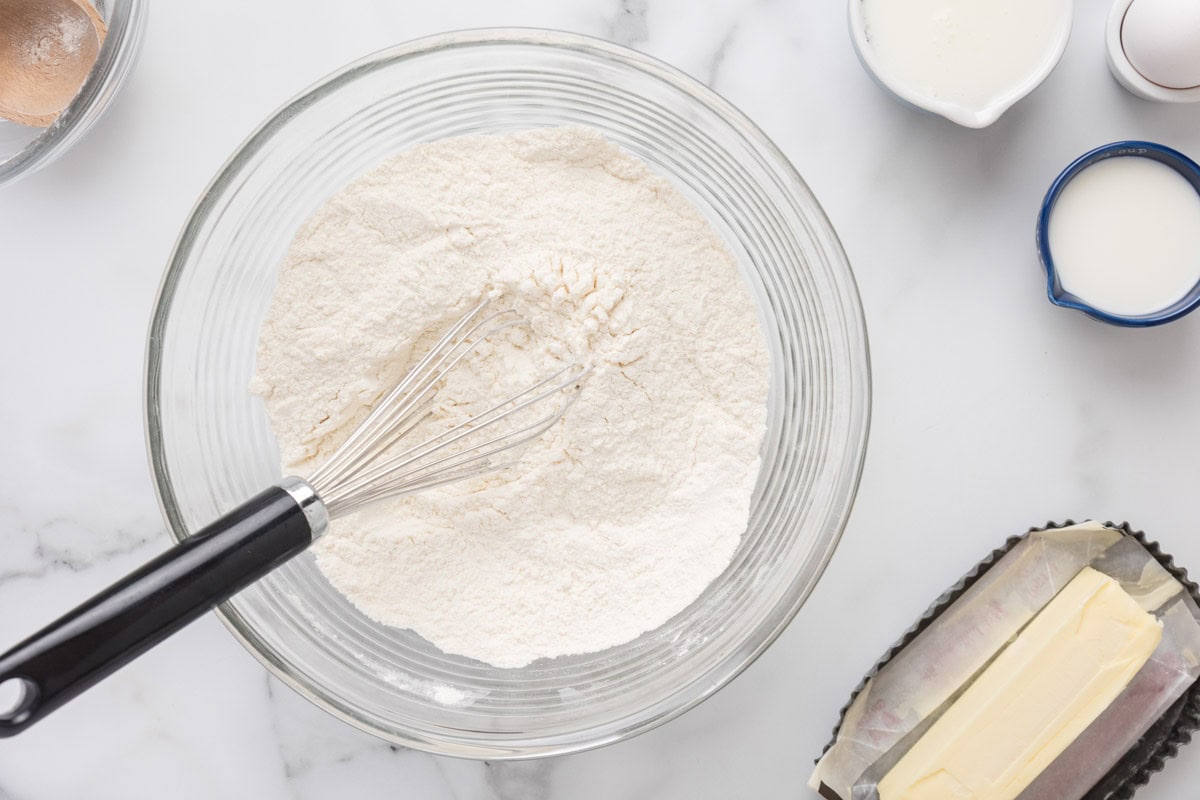
Step 1 | Measure the Dry Ingredients
Line a baking sheet with parchment paper or a silicone baking mat. Preheat oven to 425°F. Add all the dry ingredients to a medium-sized mixing bowl and whisk to combine.
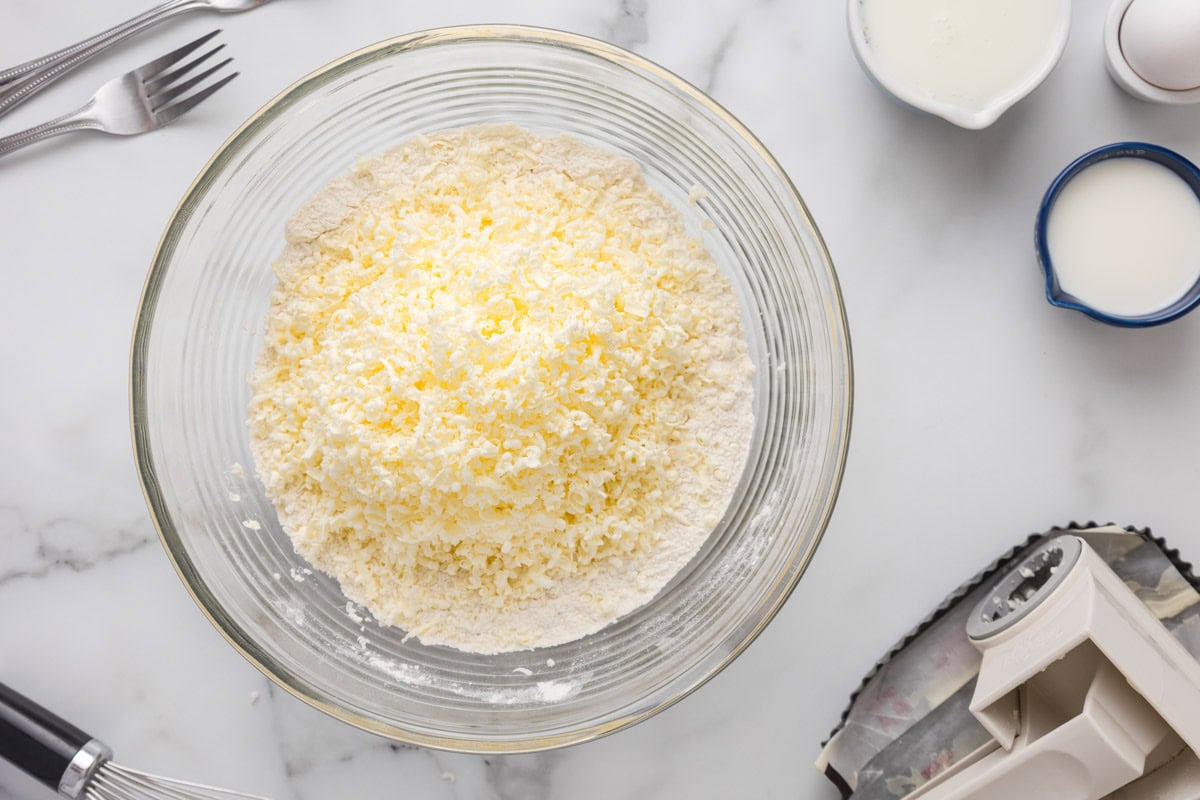
Step 2 | Grate the Butter
Freeze the stick of butter for at least 20 minutes. Using a box grater or cheese grater, grate the frozen butter directly into the dry mix using the larger holes.
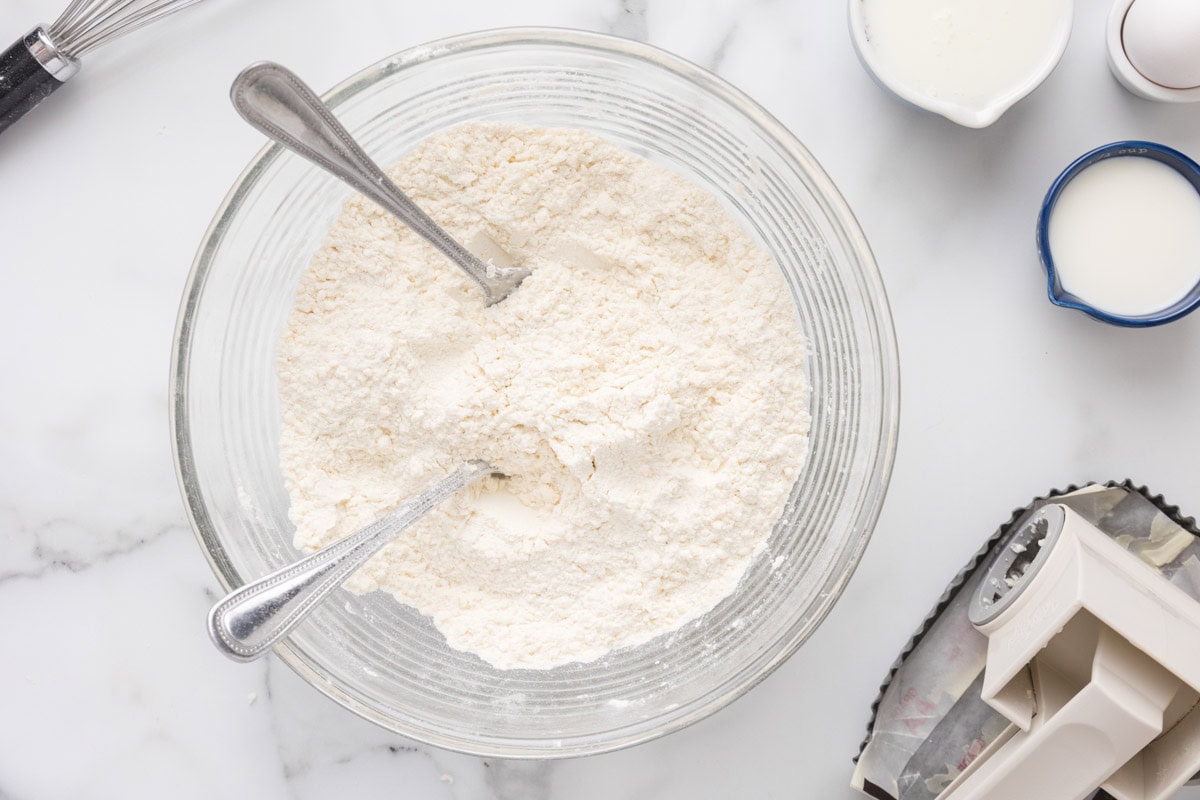
Step 3 | Mix
With two forks, mix the butter into the dry mixture, fully coating the butter.
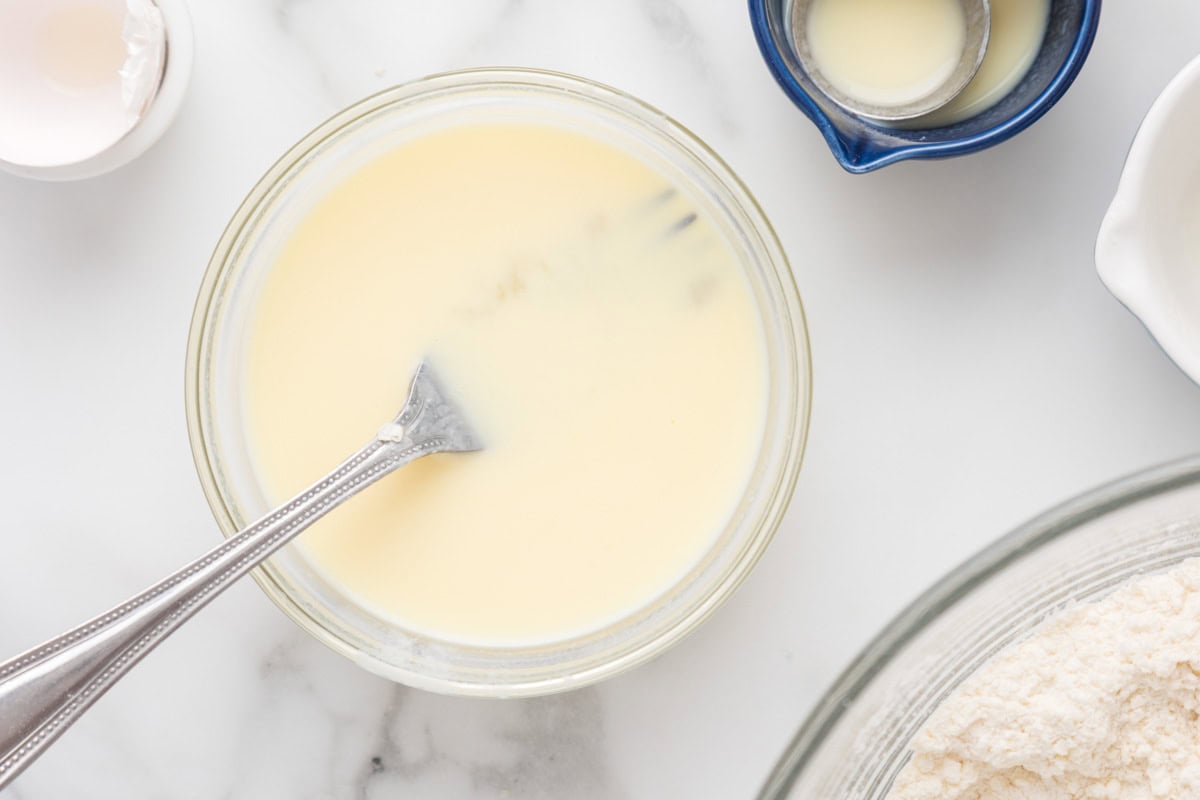
Step 4 | Measure Wet Ingredients
In a small bowl, whisk together the buttermilk, milk, and egg; reserve 1 Tbsp of the mixture for the egg wash.
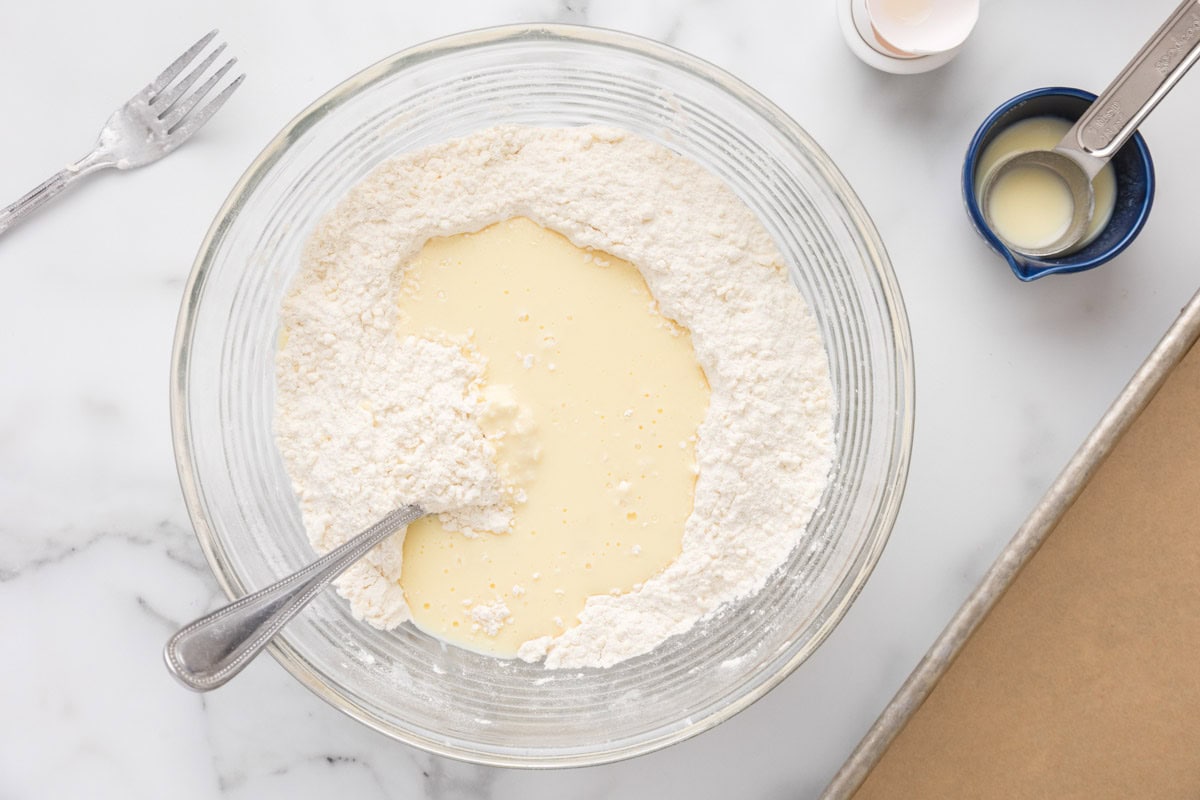
Step 5 | Combine Wet and Dry Ingredients
Top the flour mixture with the egg mixture.
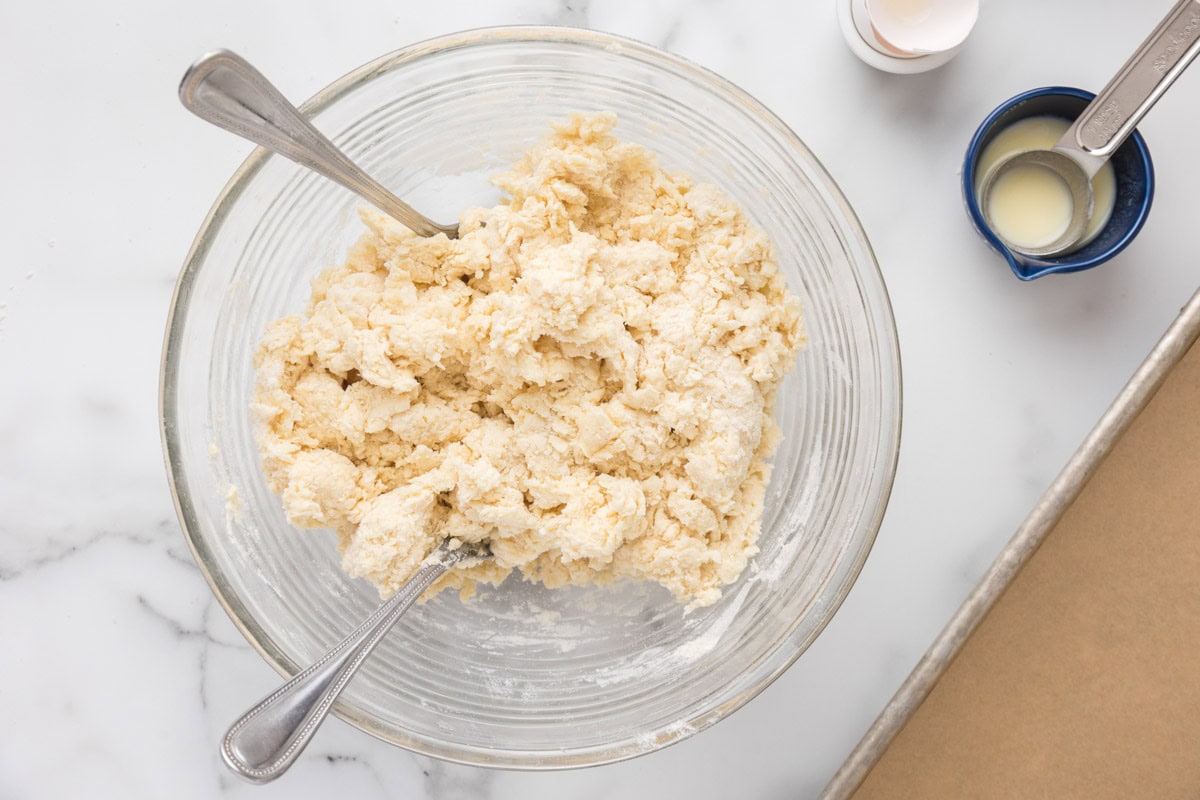
Step 6 | Mix
Using two forks, mix until a rough dough forms.
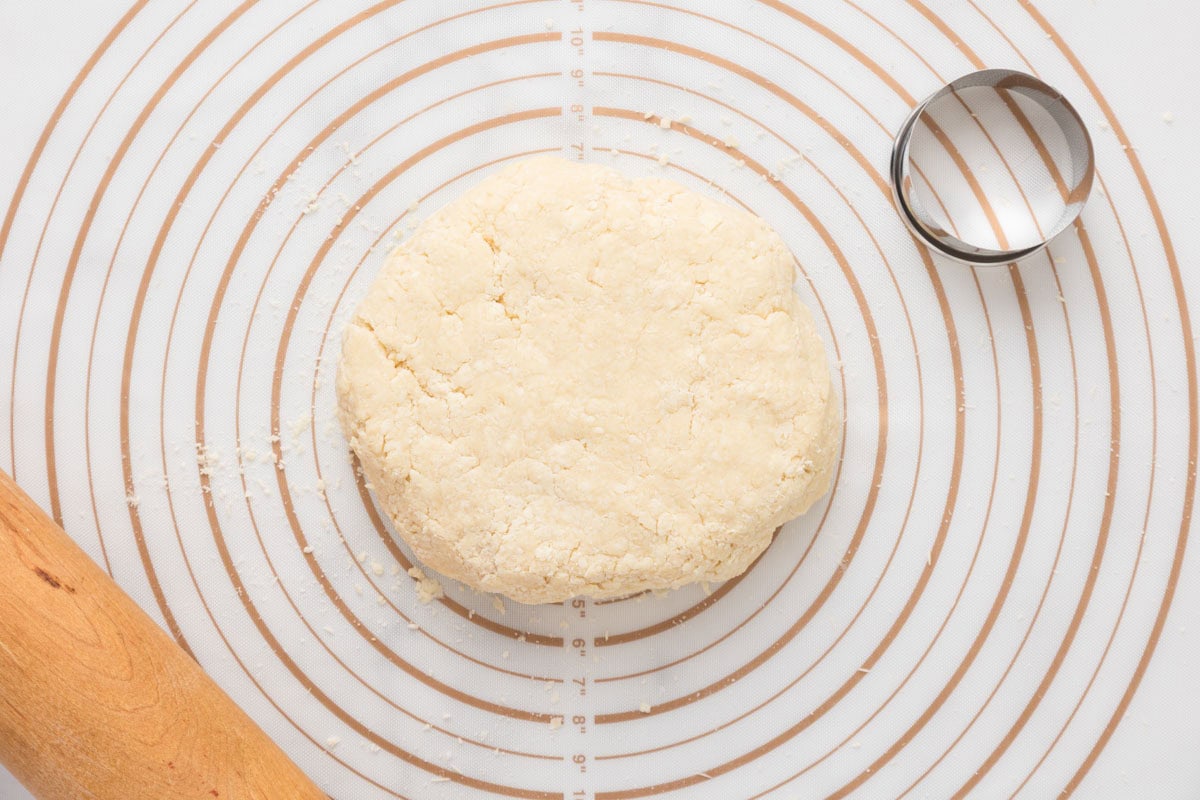
Step 7 | Shape into a Circle
Very lightly flour the counter and add the dough. Gently knead the dough into a round.
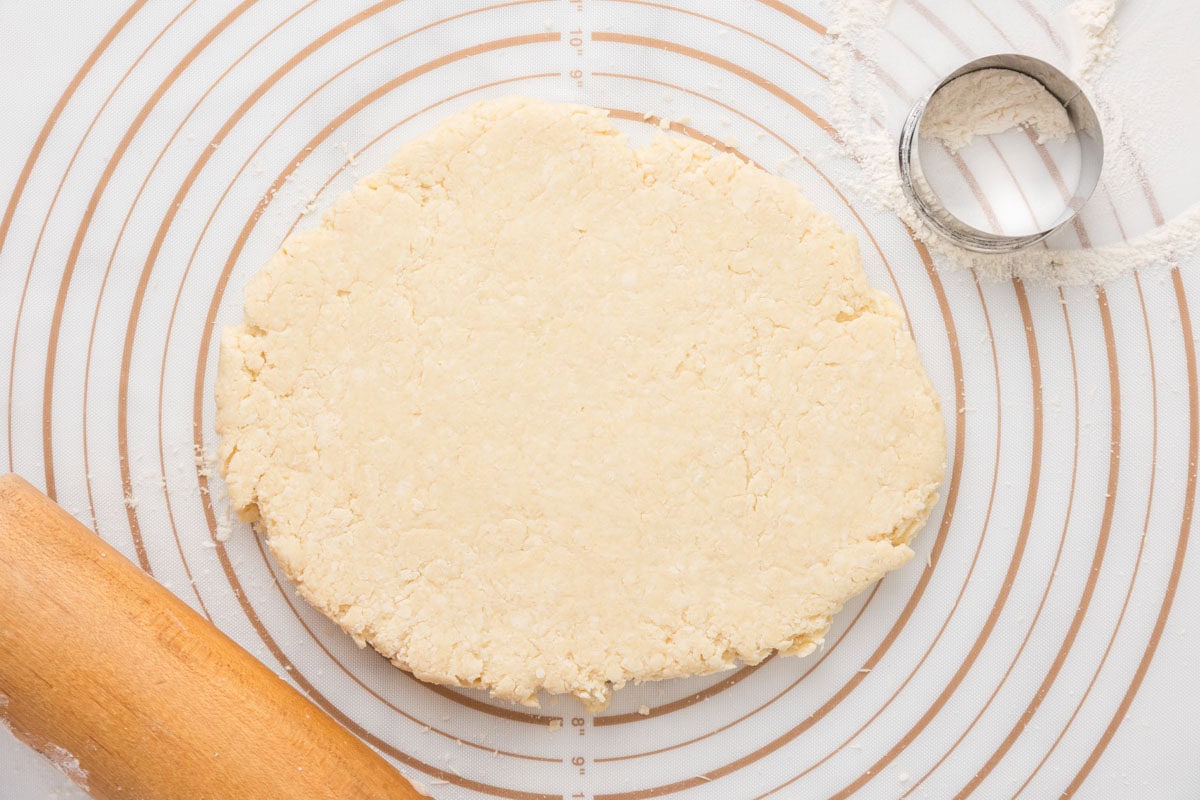
Step 8 | Roll into a Disc
With a floured rolling pin, roll the dough out to about 1 inch thick.
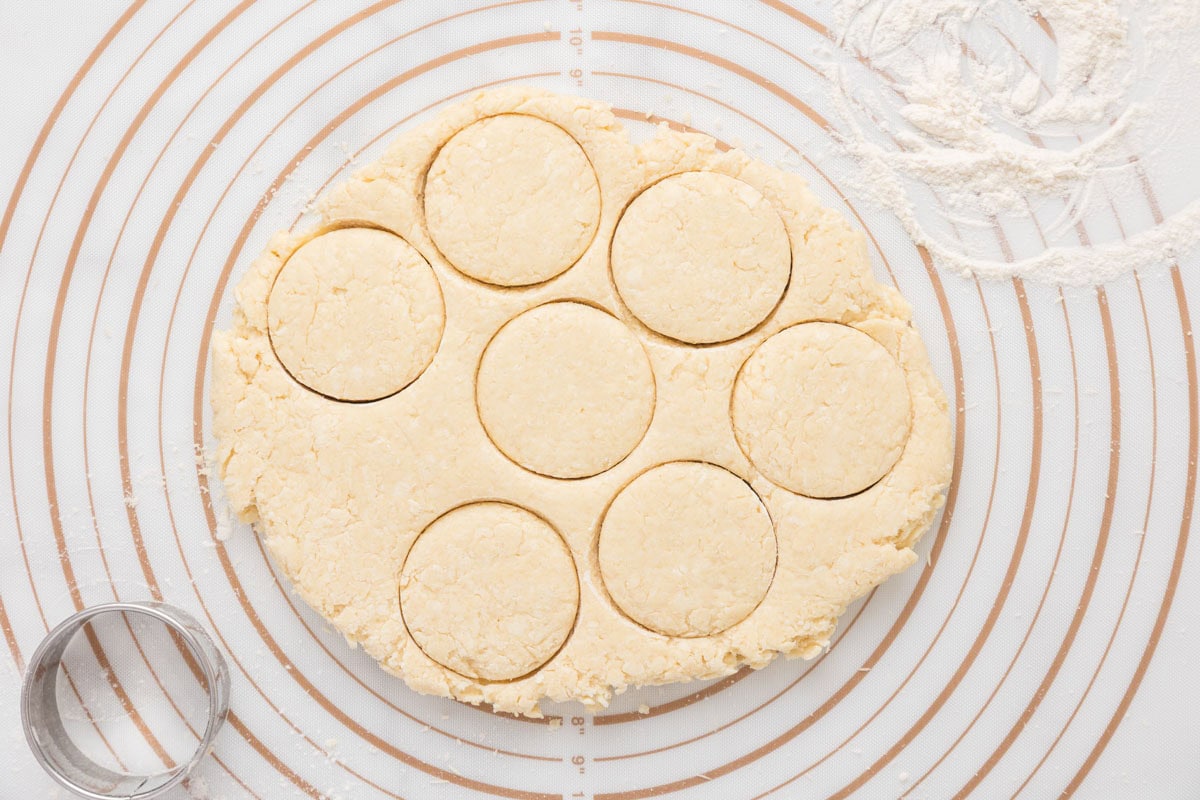
Step 9 | Cut Out Circle-Shaped Scones
Cut out circles with a 2 1/4-inch cookie cutter. Press straight down without twisting the cutter. Re-roll the dough as necessary, handling it as little as possible to keep the butter from getting warm.
Step 10 | Bake & Enjoy
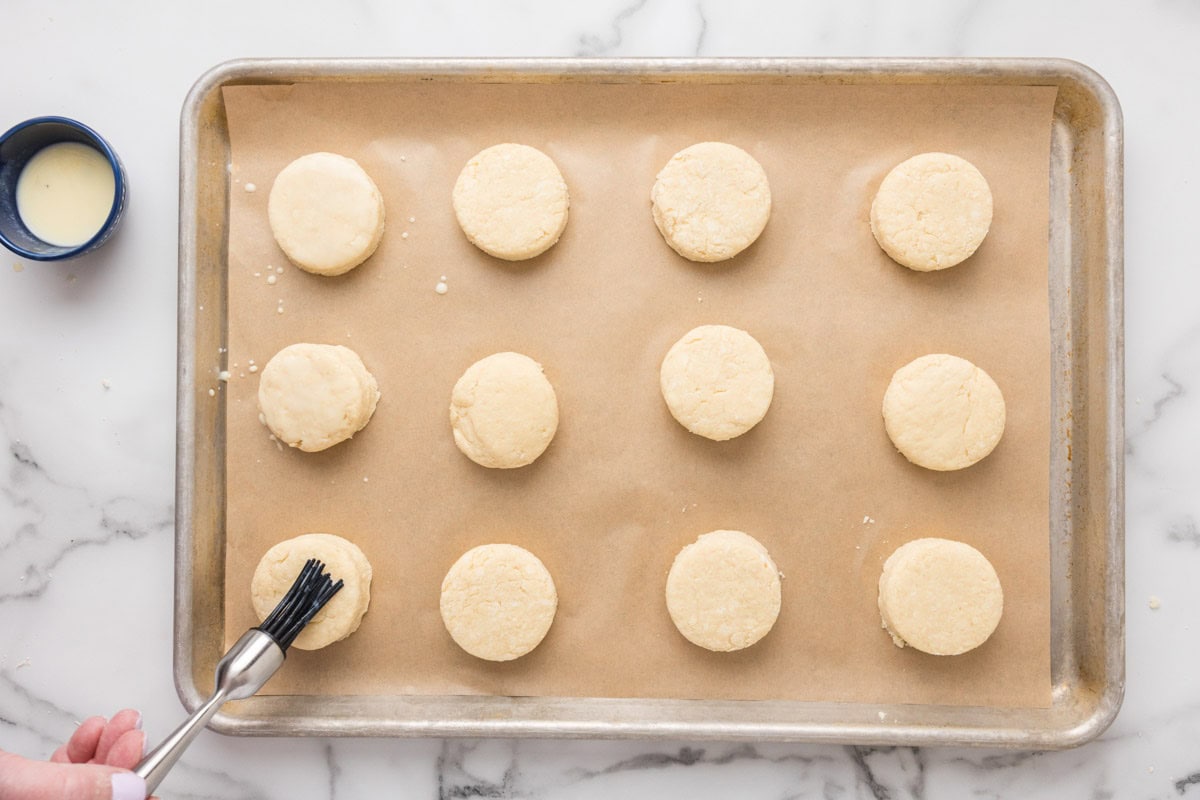
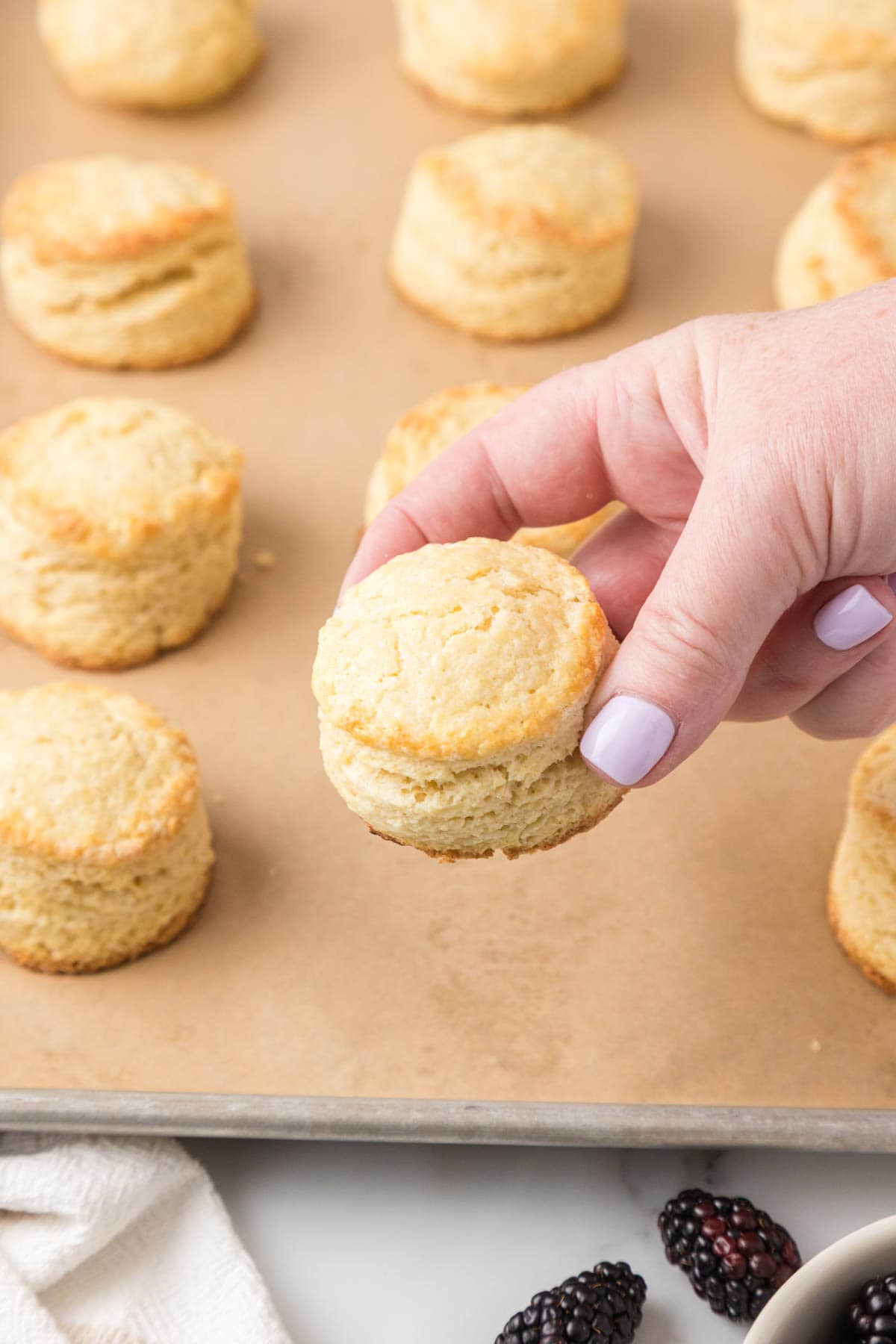
Place the scones onto the prepared baking sheet and brush the top of the scones with the reserved egg mixture. Bake for 12-15 minutes till the scones are golden brown on top. Remove and let cool slightly.
Easy Variations
- Add raisins for a classic English version. Stir about 1/4 cup into the dry ingredients before adding the wet. Golden raisins are the most traditional, but regular raisins work perfectly well too.
- No buttermilk? Make a quick substitute. Add 1/2 tablespoon of white vinegar or lemon juice to a measuring cup, then fill to the 1/2-cup line with regular milk. Let it sit for 5 minutes before using.
- Make mini scones for a party. Use a smaller cutter (about 1 1/2 inches) and reduce the baking time to 10 to 12 minutes. They’re perfect for a tea party or brunch table where you want bite-sized options!
Expert Tips
Here are the top tips I use for the best English scones!
- Use a box grater with a handle. Grating frozen butter with your bare hands is a quick way to warm up the butter. A handled grater keeps your palms away from the butter so it stays cold the whole time. If the butter softens after grating, pop the whole bowl in the freezer for 5 minutes before continuing!
- Keep every ingredient cold. Cold ingredients are the single most important factor in a light, tall scone. If your kitchen runs warm or it’s summertime, chill your mixing bowls and even your flour before starting.
- Press the cutter straight down without twisting. Twisting the cutter seals the edges of the dough and prevents the scones from rising properly. Press firmly and lift straight up. A clean, sharp cut gives you that beautiful rise!
- Handle the dough as little as possible. Overworking the dough develops the gluten and melts the butter, both of which work against you. Mix just until a rough dough forms, knead it gently into a round, and roll it out once or twice at most. The less you handle it, the fluffier your British scones will be!
What to Serve With English Scones
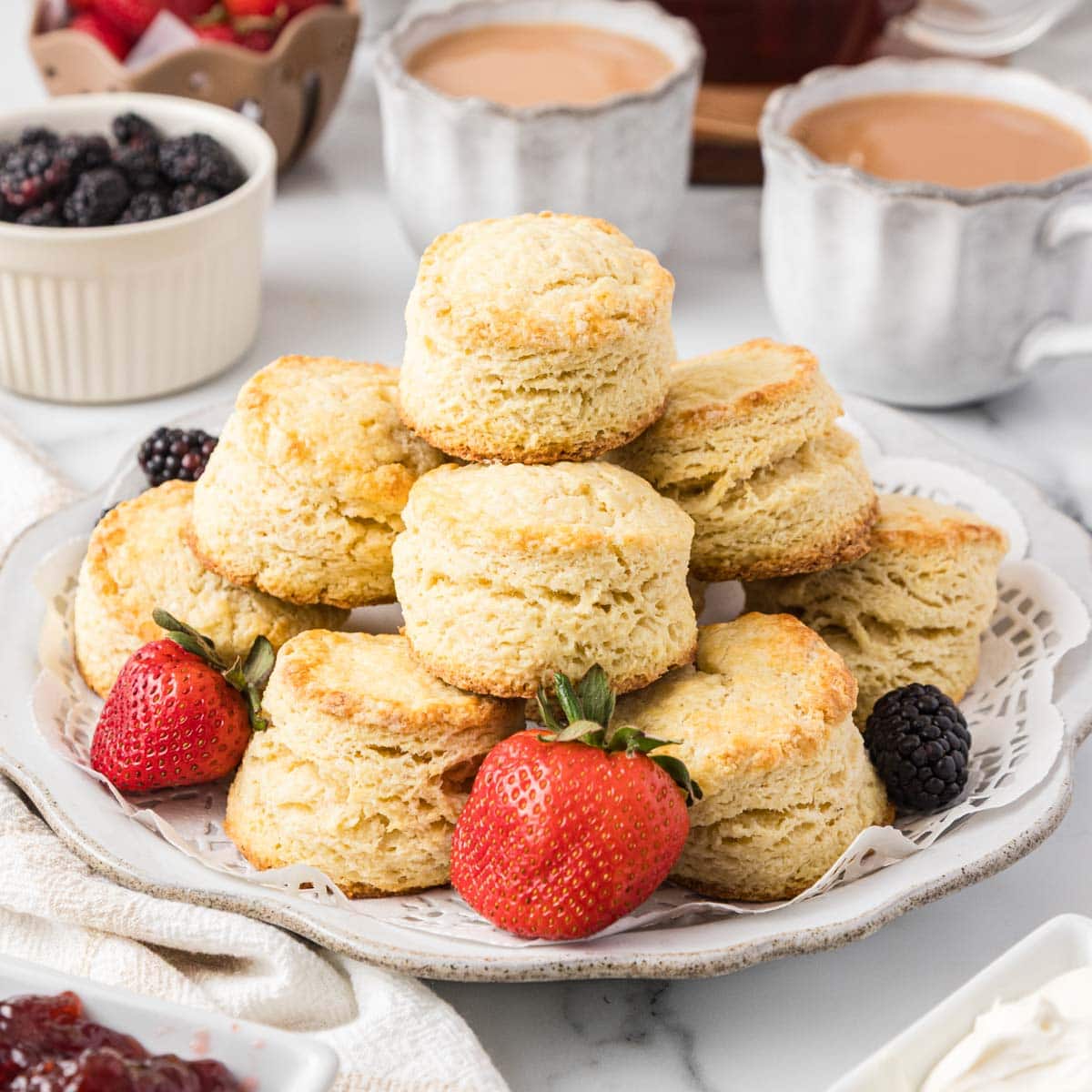
An English scone is usually accompanied with a cup of tea! My personal favorite is a cup of Earl Grey tea. Top the scones off with some clotted cream and a good jam like my Strawberry Jam or Cherry Jam. If you can’t find clotted cream at your store, you can find it online!
For a full brunch spread, pair them with my Cucumber Sandwiches or some Berry Fruit Salad!
Storage & Make-Ahead Tips
Storage: Keep cooled scones in an airtight container at room temperature for up to 2 days or in the refrigerator for up to one week. They’ll start to dry out after that.
To freeze (unbaked): Cut the scones, place them on a baking sheet, and freeze until solid. Transfer to a freezer bag and store for up to 3 months. Bake straight from frozen at 425°F, adding 2 to 3 minutes to the baking time.
To freeze (baked): Let scones cool completely, then freeze on a baking sheet. Once solid, transfer to a freezer bag. To serve, defrost and reheat at 325°F for about 5 minutes.
Make Ahead: Combine the flour mixture and grated butter and store in the refrigerator or freezer. When you’re ready to bake, just add the wet ingredients and go.
Recipe FAQs
English scones are soft, lightly sweet, and meant to be split and topped with clotted cream and jam. They’re rolled and cut into rounds. American scones are denser, richer, often packed with mix-ins like fruit or chocolate, and cut into triangles. Both are wonderful, but they’re really two different baked goods.
The most common culprits are warm ingredients, overworked dough, and too much flour added during shaping. Keep everything cold, handle the dough as little as possible, and use a light hand with any extra flour on the counter.
Absolutely. The English scones recipe calls for a 2 1/4-inch cutter, but you can go slightly larger or smaller depending on what you have. Just adjust the baking time accordingly: smaller scones will need a minute or two less, larger ones may need a minute or two more.
More Brunch Recipes to Try
Hungry for more easy, home-cooked, delicious recipes?
Sign up for my free recipe club to get family-friendly recipes in your inbox each week! Find me sharing daily meal-time inspiration on Pinterest, Facebook, and Instagram.
Best English Scones Recipe

Click Stars To Rate
Ingredients
- 3 cups All-Purpose Flour
- 1 stick of butter - frozen
- ½ cup buttermilk
- ¼ cup milk
- 1 large egg
- 3 teaspoon baking powder
- 1 teaspoon baking soda
- 1 teaspoon salt
- ¼ cup granulated sugar
Instructions
- Line a baking sheet with parchment paper or a silicone baking mat. Preheat oven to 425°F.
- Add all the dry ingredients to a medium-sized mixing bowl and whisk to combine.
- Freeze the stick of butter for at least 20 minutes. Using a box grater or cheese grater, grate the frozen butter directly into the dry mix using the larger holes. With two forks, mix the butter into the dry mixture, fully coating the butter.
- In a small bowl, whisk together the buttermilk, milk, and egg; reserve 1 Tbsp of the mixture for the egg wash.
- Top the flour mixture with the egg mixture. Using two forks, mix until a rough dough forms.
- Very lightly flour the counter and add the dough. Gently knead the dough into a round. With a floured rolling pin, roll the dough out to about 1 inch thick. Cut out circles with a 2 1/4-inch cookie cutter. Press straight down without twisting the cutter. Re-roll the dough as necessary, handling it as little as possible to keep the butter from getting warm.
- Place the scones onto the prepared baking sheet and brush the top of the scones with the reserved egg mixture.
- Bake for 12-15 minutes till the scones are golden brown on top.
- Remove and let cool slightly.
Notes
- I like to use a cheese grater with a handle to grate the butter, this way my hands do not heat up the butter. If the butter is soft after grating, stick the bowl back into the freezer for 5 minutes.
- English scones are usually served plain, or with some raisins – approximately 1/4 cup.
- English Clotted cream is delicious but not readily available outside of the UK. It can be found at specialty online UK shops or on Amazon. Alternatively, you can also serve it with butter or whipped cream cheese.
Want to Save this Recipe?
By submitting this form, you consent to receive emails from Soulfully Made.
Nutrition
Soulfully Made is not a dietician or nutritionist, and any nutritional information shared is an estimate. If calorie count and other nutritional values are important to you, we recommend running the ingredients through whichever online nutritional calculator you prefer. Calories and other nutritional values can vary quite a bit depending on which brands were used.
